
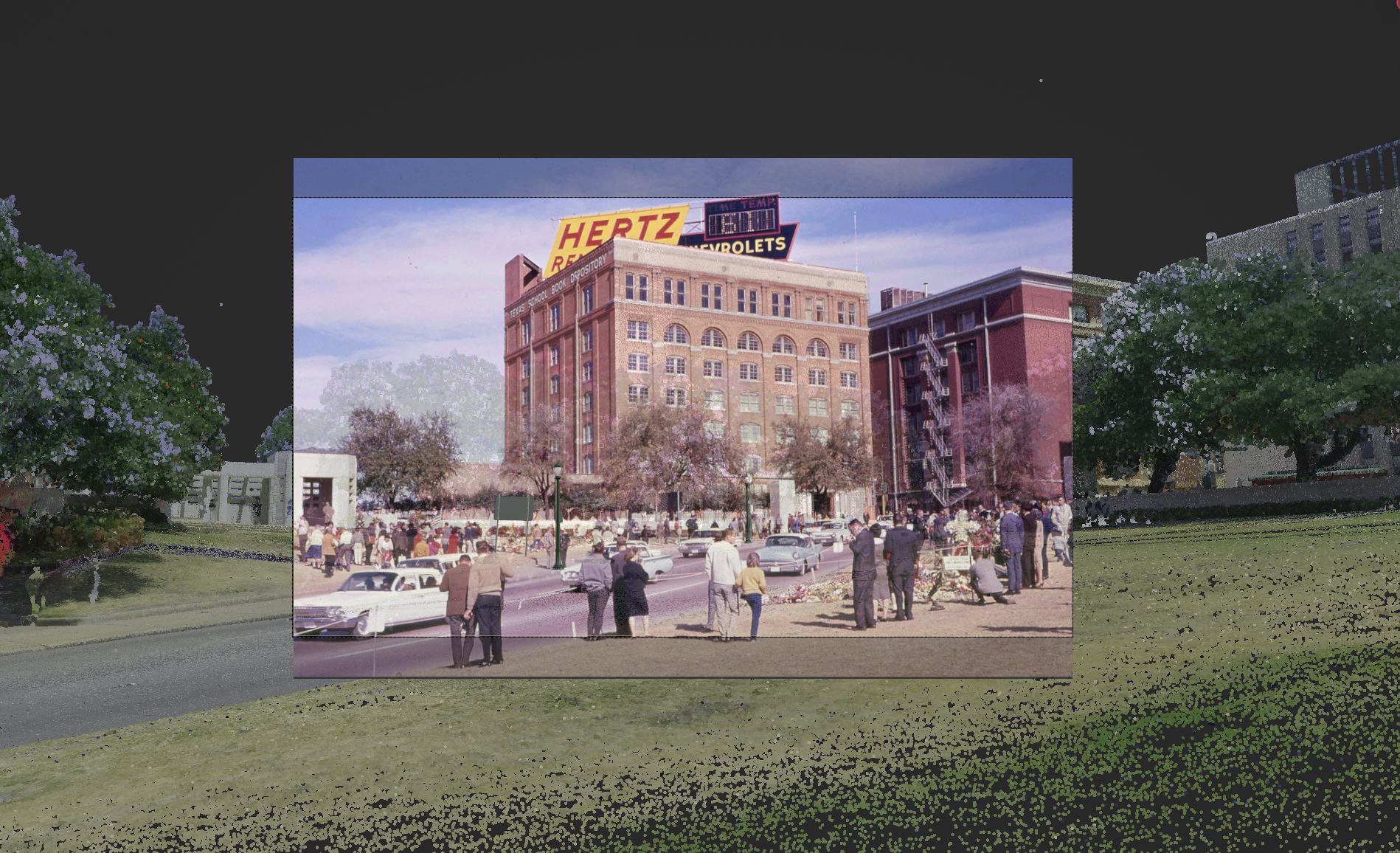
The science of obtaining accurate 3D measurements from photos
Photogrammetry is a measurement and visualization technique that converts two‑dimensional photographs into accurate three‑dimensional data. By identifying and matching common points across multiple photographs—and correlating them with aerial imagery, laser scans, or existing 3D models—engineers can precisely determine object positions, orientations, and dimensions within a scene. This allows physical evidence to be analyzed in true 3D space using information already captured in photographs.
Knott Laboratory uses photogrammetry to determine vehicle positions, quantify damage and deformation, document evidence locations, and measure features such as tire marks, gouges, and scene geometry. These measurements support engineering analysis, accident reconstruction, and validation of conclusions. Photogrammetry is also used to enhance visual exhibits and animations by accurately aligning 3D models with real‑world imagery, creating clear and realistic representations of complex events.